


Route to Elba Island
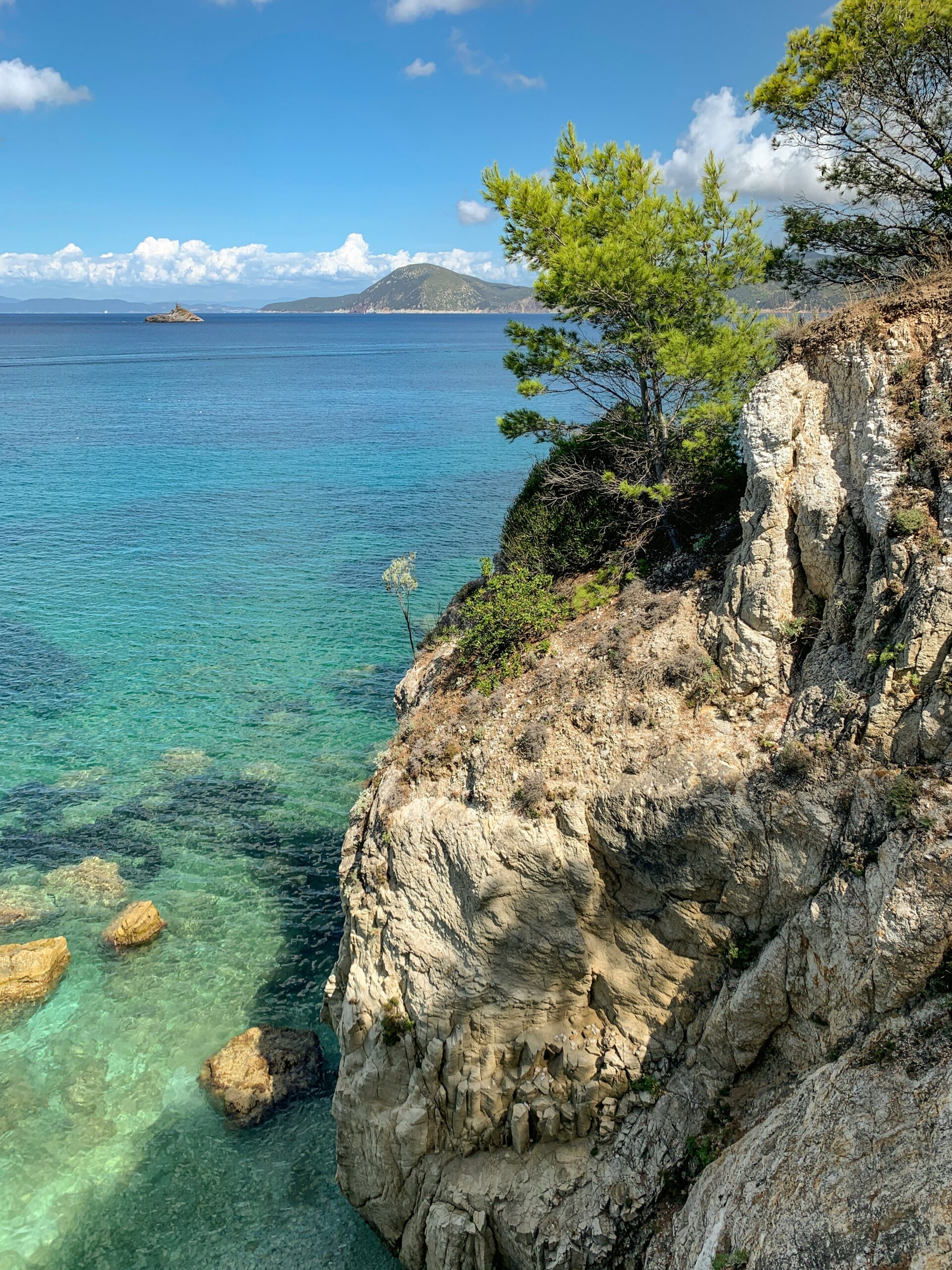
The itinerary to discover the Island of Elba unfolds like a circular journey able to reveal the different sides of a small but incredibly diverse land, where geology has always guided history, the economy, and shaped some of Italy’s most famous beaches.
The journey starts in Portoferraio, the historical and administrative capital of the island. Arriving at its port, your eyes are immediately drawn to the majestic pink stone fortifications surrounding the old town. This fortress-city, originally named Cosmopoli, was refounded in the 16th century by Cosimo I de’ Medici to create an impregnable stronghold against pirate raids in the Tyrrhenian Sea. Centuries later, the same strategic isolation caught the attention of Napoleon Bonaparte, who lived his historic exile here, profoundly transforming the island’s cultural landscape and leaving behind splendid residences like Villa dei Mulini. From a natural perspective, the northern coast of Portoferraio stands out for its spectacular cliffs and its famous white sandy beaches. Places like Spiaggia delle Ghiaie, famous for its smooth eurite pebbles that legend says were colored by the sweat drops of the Argonauts, the spectacular Spiaggia di Capo Bianco, and the wild Spiaggia di Sansone offer waters with almost Caribbean clarity, protected by a marine biological reserve that attracts snorkeling enthusiasts. Today, the town’s economy revolves around port services and elite tourism, but strolling through the alleys of the center, you can still feel a strong artisanal tradition. This shows in the production of artistic ceramics and signature perfumes, a modern craft that has managed to capture the essences of the Mediterranean scrub, like rockrose and myrtle, in bottles, turning the local flora into a way to promote the area.
Moving towards the eastern side, the landscape changes drastically and you dive into the heart of Elba’s mining history. Areas like Rio Marina and Rio nell’Elba hold a millennia-old memory tied to iron extraction, an activity that sustained the island from the Etruscans all the way to the closure of the last mines in the last century. Here, the land takes on shades of ochre, red, and shiny black, and even the coastlines reflect this extraordinary geology. Examples of this are Topinetti Beach and Cala Seregola Beach, where the dark, iron-rich sand sparkles in the sun due to hematite and pyrite dust, creating a unique color contrast with the blue of the sea. A bit further south, Portoazzurro reflects the period of Spanish rule in the 17th century, visible in the monumental San Giacomo Fortress overlooking the bay, and gives access to little coastal gems like Barbarossa Beach. The economy of this area had to go through a major shift: the old open-pit mines have now become archaeological parks and eco-museums, and the land’s tradition has moved to winemaking. Local crafts reflect this change, focusing on working with minerals to create unique jewelry and on traditional dry pastries. A good example is Schiaccia Briaca, a typical miners’ sweet made with dried fruit and soaked in Elba’s Aleatico wine, once eaten to keep for a long time and give energy during tough mining shifts.
Continuing the itinerary towards the western ring, you encounter the island’s more mountainous and wild soul. Ancient villages like Marciana, perched on the rocks and protected by medieval Pisan fortresses, lead into the Monte Capanne massif. This imposing granite mountain dominates all of Elba and offers a unique natural environment, with dense chestnut and holm oak forests that cool the air even in the middle of summer. At the foot of this massif, some of the island’s most stunning sandy bays open up, nestled between granite headlands: Fetovaia Beach, sheltered by a long green promontory, and the nearby Cavoli Beach, famous for its golden sand with warm grains that make swimming enjoyable even off-season. The economy of this region has historically been tied to granite extraction, a material so prized that local stonemasons exported it as far back as Roman times to erect the columns of the Pantheon. Today the area thrives on sustainable tourism related to trekking, while along the coast Marciana Marina maintains a small artisanal fishing fleet and has a strong tradition of wooden shipbuilding, touched by the waters of the picturesque Biodola Beach, just a little further east. Local crafts are closely connected to these resources and show up in chestnut wood carving and the production of mountain food and wine delicacies, including chestnut honey and wines from heroic viticulture, whose vines grow on steep terraces right above the sea.
The journey ends in the southern quadrant, an area characterized by wide alluvial plains and the island’s largest and most popular sandy beaches, such as the big Marina di Campo Beach, perfect for families. This village, which grew around a Medici watchtower, contrasts with nearby Capoliveri, a town perched on a hill with Etruscan roots and a medieval layout made up of narrow streets called “chiassi.” From Capoliveri’s territory, you can reach iconic beaches like Innamorata Beach, linked to a poignant 16th-century pirate-era legend, and the large Lacona Beach, famous for its protected sandy dunes where sea lilies bloom. While Capoliveri once tied its economy to the mines of the Calamita promontory, today this whole area represents the beating heart of the island’s beach and hospitality tourism. The plain of Campo also allows for more intensive agricultural and wine-growing development compared to the rest of Elba. In the artisan workshops of Capoliveri and Marina di Campo, leatherworking thrives, alongside the revival of ancient sea-related crafts, like making nautical items and artistic ropework, which can blend traditional seafaring knowledge with contemporary design.